
Culture · Branding · Design
Indie sleaze, branding, and why raw sells
For years branding all went the same way: clean, minimal, acres of white space, soft gradients and that sense of "everything is under control". And it worked, until it stopped working, because every brand started to look exactly alike. That is when indie sleaze came back: direct flash, grain, the messy, the stuff that looks like it came out of a party at three in the morning on a 2007 digital camera. It is not free nostalgia. It is that after a decade of polished perfection, raw feels human again. And human connects. Here is why that happens and how to use it without it feeling forced.
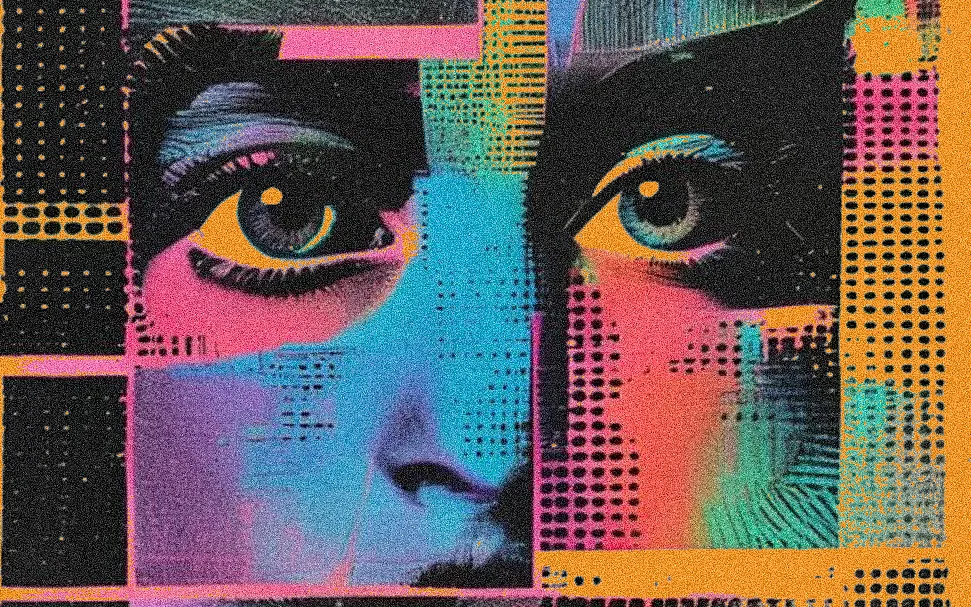
What indie sleaze is (and why it came back right now)
Indie sleaze is the aesthetic of the late 2000s: harsh flash, blurry photos, grain, saturated colours, that air of "I didn't get ready for this picture". It came back for a clear cultural reason: we are saturated with perfection. Every feed is a flawless catalogue, every brand has the same soft palette and the same sans serif. When everything is perfect, perfect stops impressing and starts boring. Raw returns as a breath of air, as something that feels real in the middle of all that filtering.
1. Imperfect reads as honest
There is something curious about how we process images: too polished puts us on guard. We know there is a team behind it, a retouch, an intention to sell us something. Raw, by contrast, lowers that defence: it feels spontaneous, unmasked, true. And trust is the foundation of any brand that wants to sell. A photo with direct flash and a bit of grain communicates "this is real" far faster than a perfect studio production. Imperfection, used well, is a credibility tool.
2. It stands out because it breaks the visual pattern
We covered this in another article: the eye stops at whatever breaks the pattern. If your whole sector's feed is minimal and soft, a brand with a raw aesthetic jumps out immediately. Not because it is prettier, but because it is different. In a sea of white and pastel gradients, grain and direct flash are a flag. Indie sleaze works partly by contrast: it shines precisely because almost nobody in your competitive set dares use it.
3. It connects with an emotion, not just an eye
Polished asks you to admire the brand. Raw asks you to feel it. The indie sleaze aesthetic carries an emotional charge — energy, youth, spontaneity, night, community — that cold minimalism does not transmit. When your branding evokes a feeling and not just an image, people remember it and associate it with something. And the brands people remember are the brands people choose. You are not selling a perfect gradient; you are selling the sense of belonging to something alive.
4. Careful: raw is not careless
Here is the trap plenty of people fall into. Raw that works is calculated: the grain, the flash, the apparent mess are placed on purpose, with design judgement behind them. There is an enormous difference between an intentional raw aesthetic and simply publishing ugly, badly made things. One communicates attitude; the other, neglect. Well-executed indie sleaze is hard precisely because it has to look spontaneous without being an accident. If you do it, do it with intent, not as an excuse to lower the bar.
5. It doesn't suit every brand, and that's fine
It has to be said: this aesthetic is not for everyone. For a traditional luxury brand, a bank, or a service selling sober trust, indie sleaze probably does not fit. And forcing it shows from a mile away. This aesthetic suits brands with a young, bold, cultural personality that want to speak to an audience valuing real over perfect. The question is not "is it in fashion?", it is "is this actually who we are?". If the answer is no, find another road.
Raw isn't a trend, it's a reaction
Indie sleaze came back because the cultural pendulum got tired of perfection and went looking for the human again. Raw sells because it reads honest, because it breaks the pattern, and because it connects with a real emotion. But it only works if it is genuinely yours and made with intent. We believe that so strongly that we built the Talent Warehouse brand on the idea: direct flash, no pretence, brands that land instead of brands that merely look clean. If you got this far, you already know how it feels. The rest of the market is playing to the blank wall. We play the floor.